Hi,
Israel borders always had colorful border lines. That is on top of the beautiful colors of desert yellow, the Mediterranean sea blue, mount Hermon white (or brown depends on the color).
As Israel did not have peace agreements with its neighbor countries there were temporary agreement with lines that changed from war to war. If you grew up here, you know the palette.
We have the Green Line, that ghost of 1948 that still defines the political discourse of the West Bank. We have the Blue Line, the UN’s attempt to keep things tidy along the Lebanese border. We even have the Purple Line from the 1967 ceasefire in the Golan Heights with Syria..
But as of 2026, and even 2025, the Israeli map has a new, neon addition to the colorful border lines collection: The Yellow Line.The new line is used to mark the buffer zone Israel is creating to push away it enemies in the borders far away from the border line themselves.
In Gaza strip the line was set as part of the 2025 peace plan, which basically ended the fighting. The buffer zone, marked with concrete blocks colored in yellow, is about 53% of the strip area (mostly the eastern and northern buffers). Now days the IDF is working tirelessly to clean that buffer zone from tunnels and buildings.
The Yellow line was also on Lebanon, after Trump declared on cease fire between Israel and Lebanon. It extends 3 to 5 km into Lebanon. And just like in Gaza, it meant to create the Galilee room to breath from Hezbollah attacks. IDF forces are working here as well to clean the buffer zone from buildings and tunnels.
I just think that we might bez running out of colors. If we keep adding lines every time the Middle East resets, our maps are going to start looking like a Jackson Pollock painting—and just as messy to clean up.
Take Care
Gad
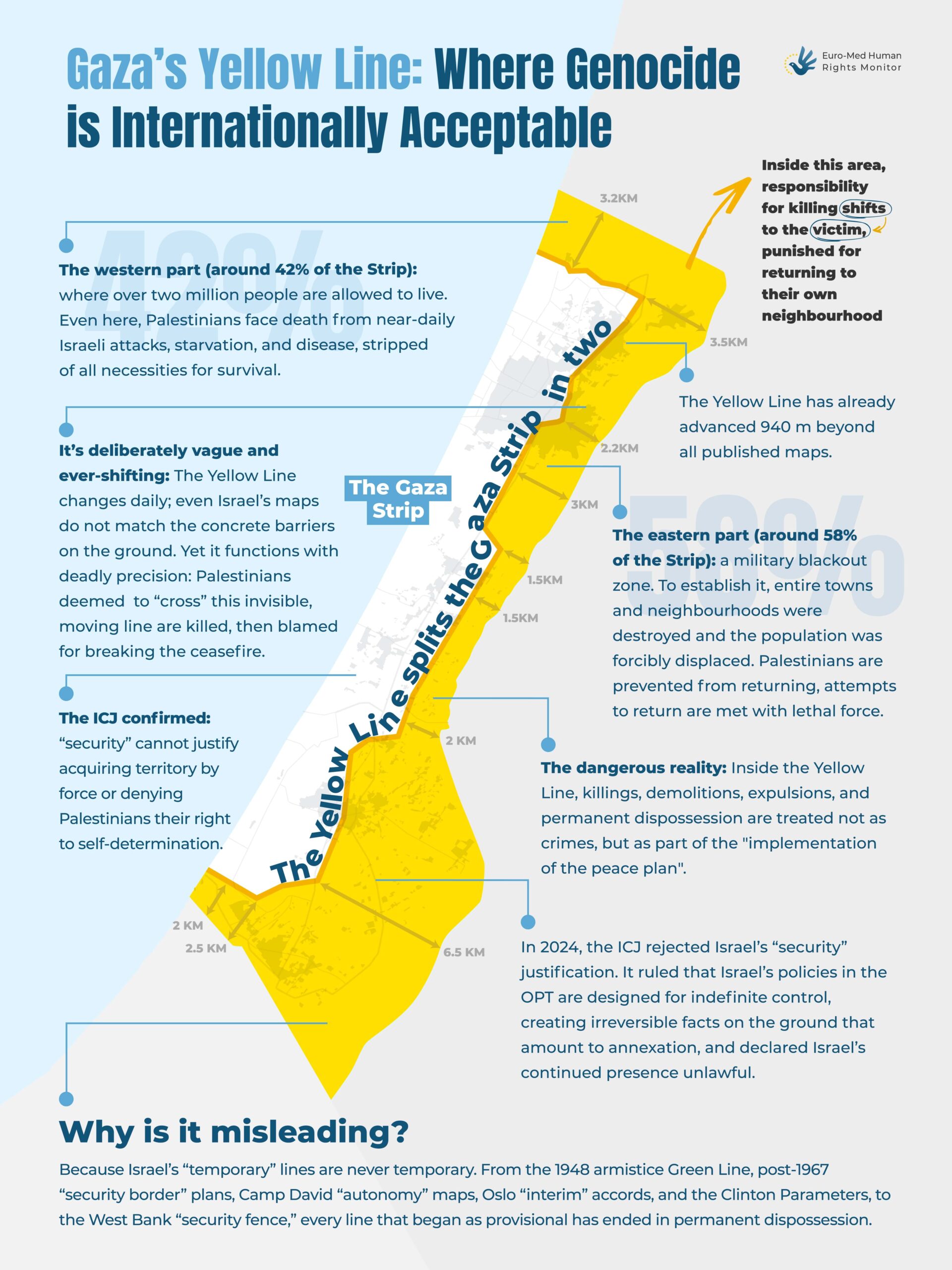 Gaza yellow line buffer zone (Source: euromedmonitor.org)
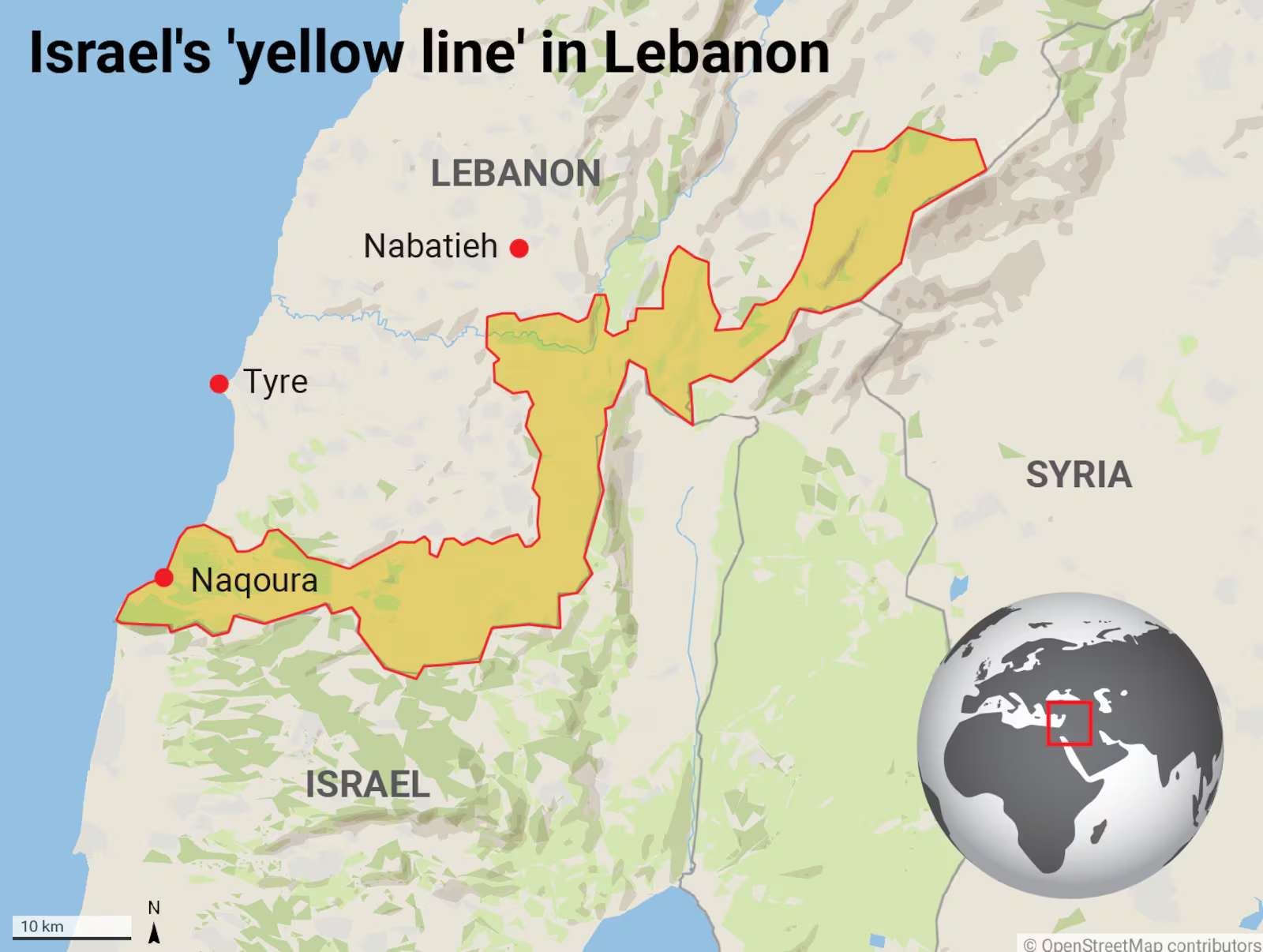 The yellow line buffer zone in Lebanon (Source: www.irishtimes.com)