
Hi,
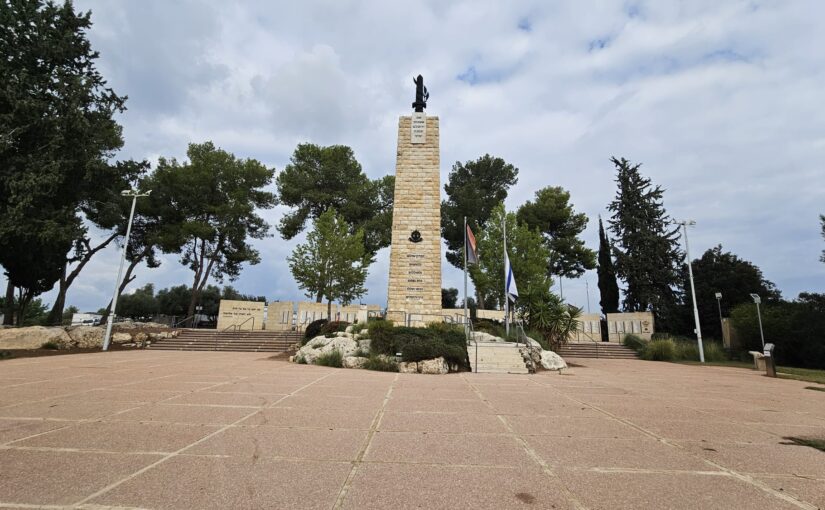
We stood in the Engineering Corps memorial site, after visiting the nearby Ottoman railway station at Nahal Sorek (Wadi Sarar). The memorial dedicated to the fallen soldiers of the Israeli Engineering Corps, and it tells a powerful story of courage, ingenuity, and sacrifice of corps.
The memorial is a big square with the “Road the Heroism” monument, which is stone pillar (that was built to honor the fallen soldiers that built the road to Jerusalem during the War of independence), stone walls with the names of the fallen soldiers of Engineering Corps, A room to memorize the fallen. An amphitheater is built in the back for the corps ceremonies.
Those fallen soldiers made survival and victory possible: from the breakthrough of the Burma Road during Israel’s War of Independence, through decades of combat engineering, logistics, mine clearance, and lifesaving infrastructure under fire — the Engineering Corps has always been about turning the impossible into reality.
As I walked along the stone walls engraved with names, I did find couple of names I recognized from my mandatory military service duty. But it did not raised any feeling reading them. Atzva then realized the place should be full of painful memorizes and hug, It did not change it.
Not all the fallen soldier of Engineering corps names are yet engraved on the stone walls, as the last years names are from 2023-24. But it does seem to include almost all the fallen soldiers of Iron Swords war. Looking on it you can understand how important the corps are in this war, and how bloody it was for the Corps:
This war has the about the same amount of fallen as each of the most bloody wars of Israel, as each has around 4 plaques of names (the War of independence has only 4 and Yom Kippur war has 4 and an half). But while the corps fallen were about 1% in the War of independence, and around 3% in Yom Kippur war, in this war the Engineering Corps fallen were about 9%.
Take Care
Gad
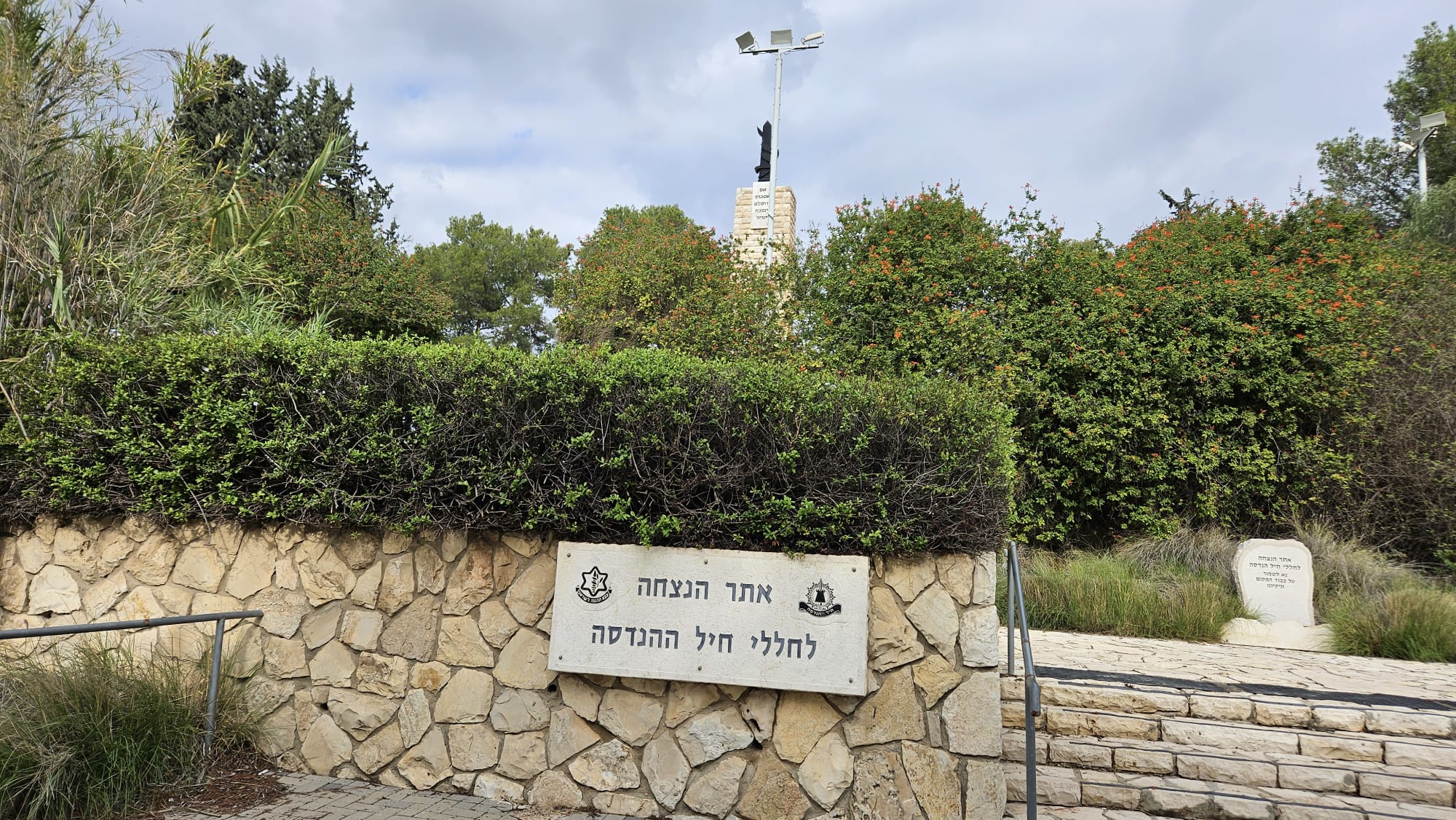 Engineering Corps memorial site
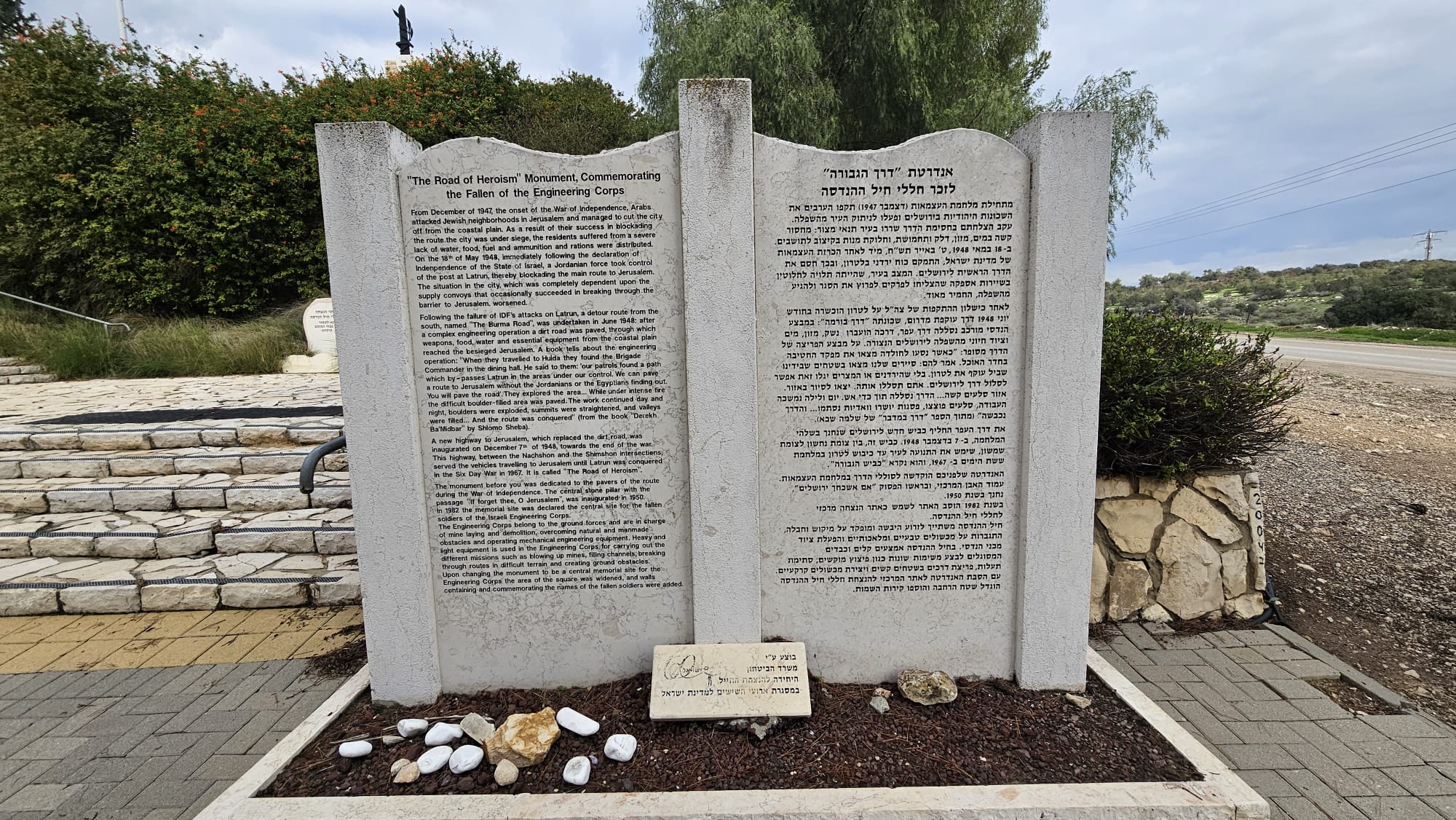 ‘The Road of Heroism” Monument, Commemorating the Fallen of the Engineering Corps. From December of 1947, the onset of the War of Independence, Arabs
attacked Jewish neighborhoods in Jerusalem and managed to cut the it off from the coastal plain. As a result of their success in blockading the route, the city was under siege, the residents suffered from a severe lack of water, food, fuel and ammunition and rations were distributed.
On the 18 of May 1948, immediately following the declaration of Independence of the State of Israel, a Jordanian force took control of the post at Latrun, thereby blockading the main route to Jerusalem. The situation in the city, which was completely dependent upon the supply convoys that occasionally succeeded in breaking through the worsened.
Following the failure of IDF’s attacks on Latrun, a detour route from the south named “The Burma Road”, was undertaken in June 1948; after a complex engineering operation a dirt road was paved, through which weapons, food, water and essential equipment from the coastal plain reached the besieged Jerusalem. A book tells about the engineering operation: “When they traveled to Hulda they found the Brigade Commander in the dining hall. He said to them: ” our patrols found a path which by – passes Latrun in the areas under our control. We can pave a route to Jerusalem without the Jordanians or the Egyptians: You will pave the road”. They explored the area.,. While under intenise fire night the difficult boulder-filled area was paved. The work continued day and night, boulders were exploded, summits were straightened, and valleys were filled … And the route was conquered” (from the book “Derekh
Ba’Midbar” (A route in the Desert) by Shlomo Sheba).
A new highway to Jerusalem, which replaced the dirt road was inaugurated on December 7th of 1948, towards the end of the war. This highway, between the Nachshon and the Shimshon intersections, Served the vehicles traveling to Jerusalem until Latrun was conquered in the Six Day War in 1967. It is called “The Road of Herolsm”.
The monument before you was dedicated to the pavers of the route during
the War of Independence. The central stone pillar with the passage “If I forget thee, O Jerusalem”, was inaugurated in 1950. In 1982 the memorial site was declared the central site for the fallen soldiers of the Israeli Engineering Corps.
The Engineering Corps belong to the ground forces and are in charge of mine laying and demolition, overcoming natural and man made obstacles and operating mechanical engineering equipment. Heavy and light light equipment is is used in the Engineering Corps for carrying out the different missions such as blowing up mines, filling channels, breaking through routes in difficult terrain and creating ground obstacles. Upon changing the monument to be centeral meorial site for the engineering corps, the area of the square was widened, and walls containing and commemorating the names of the fallen soldiers were added.
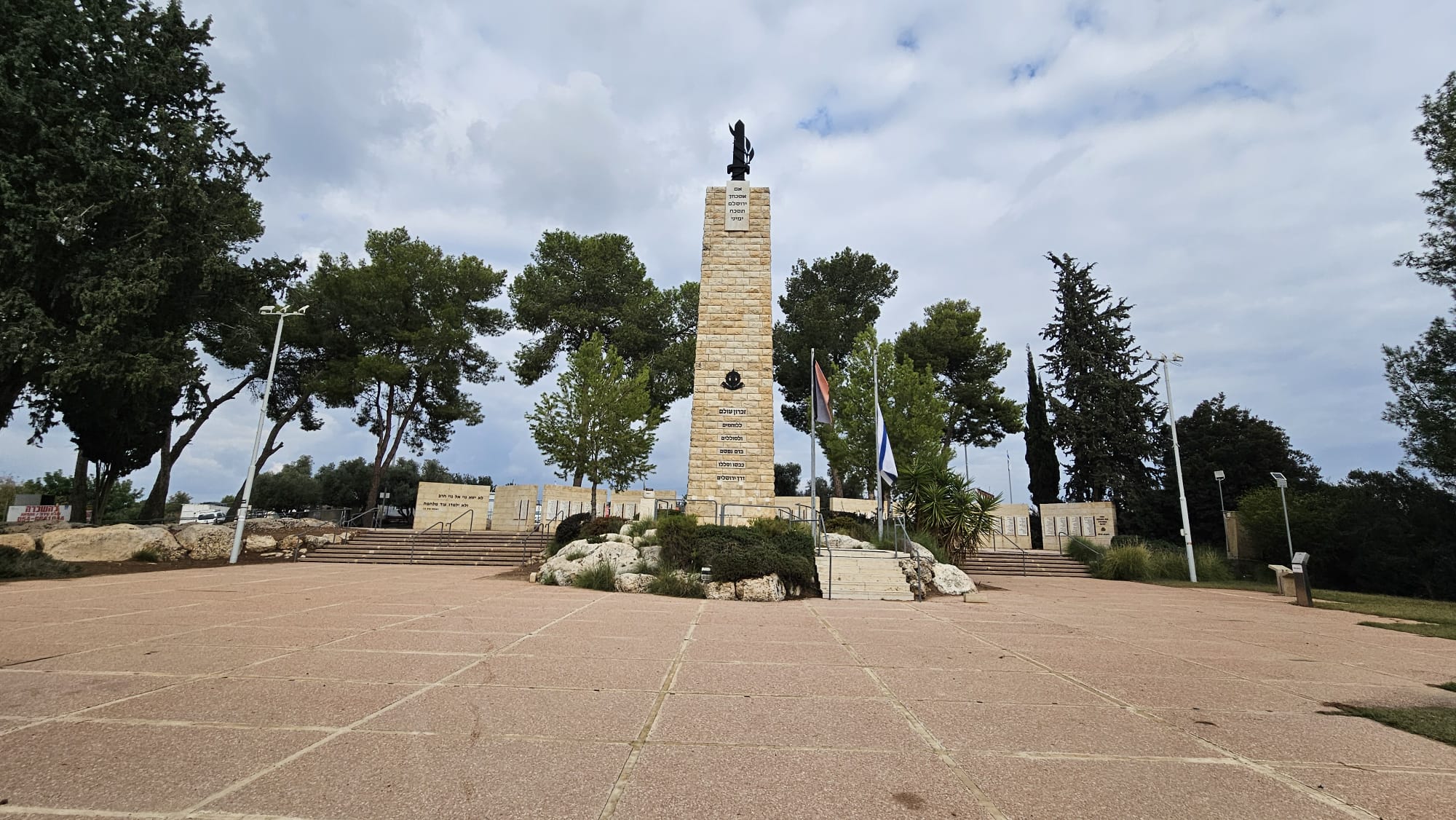 The “Road of Heroism” monument in the middle of the square, and the walls with the names of the fallen in the back.
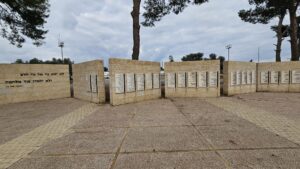
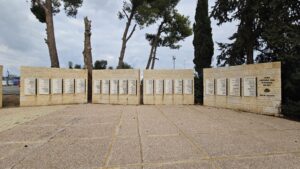
The stone walls with the names of the fallen engraved on it
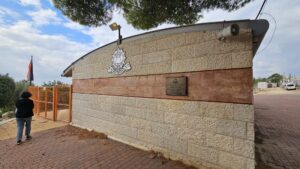
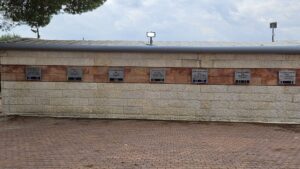
The memorial room for the fallen
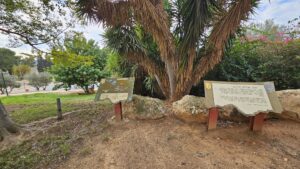
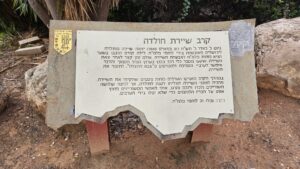
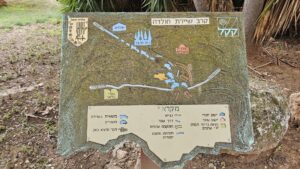
The battle of Hulda convoy – Yitzhak Rabin Park – Palmach Harel Unit
On the 20th of Adar II, 5708 (March 31, 1948), a convoy set out from Hulda to Jerusalem, secured by Palmach fighters. The night before, Palmach forces were deployed at Sha’ar HaGai to protect the convoy. However, shortly after departure, several vehicles became stuck in the mud of the nearby riverbed, enabling local Arab forces and recruits from the “Arab Liberation Army” to ambush the convoy.
During the battle, the attackers summoned reinforcements that surrounded the convoy. Most of the convoy’s fighters managed to retreat back to Hulda, but the crews of three armored vehicles were trapped, and most of them were killed. One of the fighters detonated the vehicle with his comrades inside to prevent them from falling into enemy hands.
21 Palmach fighters fell in the battle.
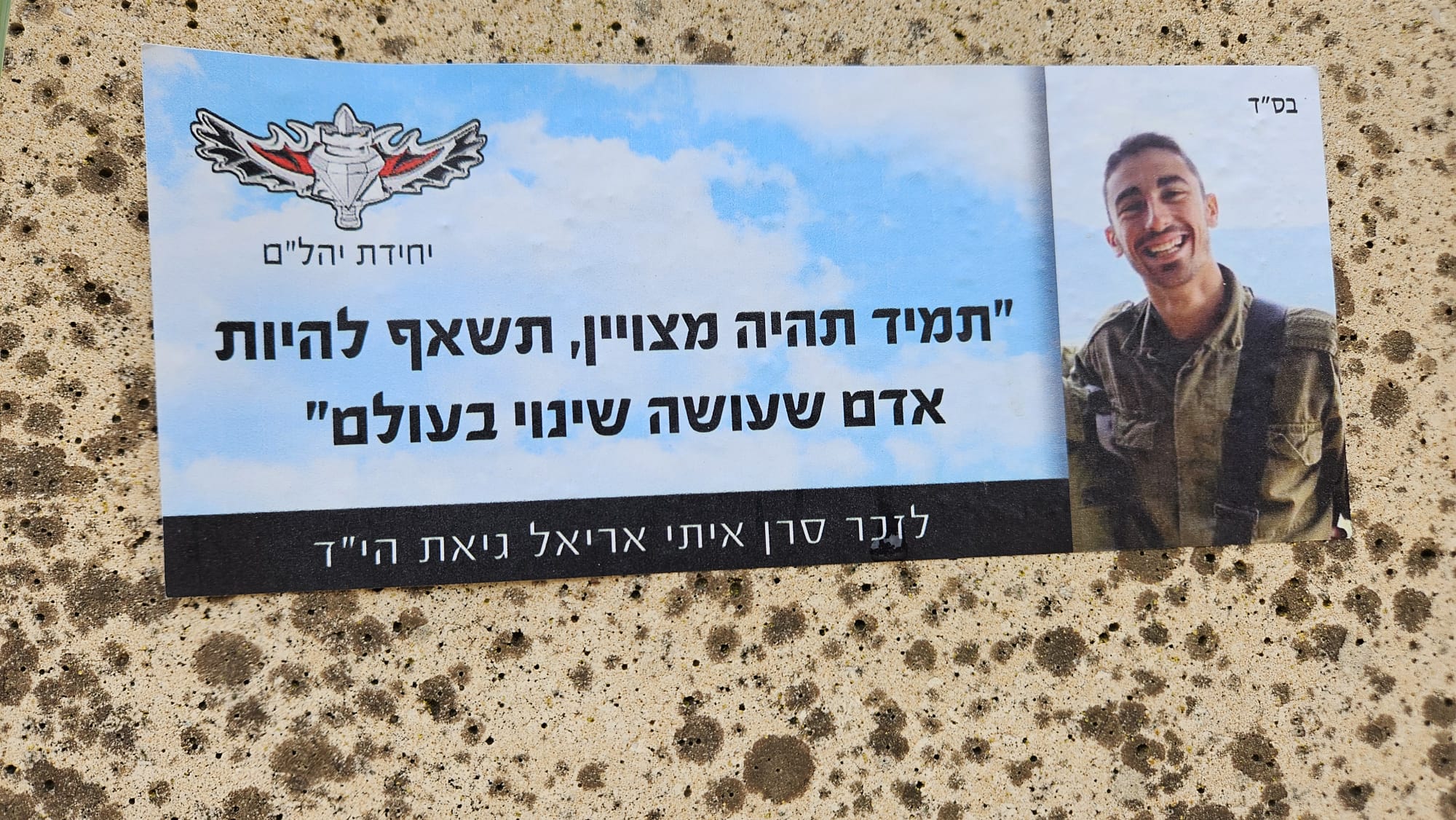 A memorial sticker on a bench in the meomiral for Captain Itay Ariel Giat from Yahalom unit of Engineering corps